01DERIVE
Derive
Human iPSCs are differentiated into endothelial cells, pericytes and cardiomyocytes. They're renewable, donor-matched, and free of animal tissue.
Based in the National Heart & Lung Institute at Imperial College London,
we engineer living human tissues to study cardiovascular and pulmonary diseases.
Programming vascular biology
to unlock next-generation medicines.
Fully human tissues, to provide fully human responses.
Mindful of the 3R principles: Reduce, Refine and Replace animal experiments.
Gene editing to enhance vascular function.
Engineering cell culture environments at the microscale.
We bring together stem-cell biology, microfabrication and quantitative imaging to build human vascular tissue that behaves like the real thing, then use it to understand and treat disease. Four themes run through the work.
Endothelial cells derived from human iPSCs will self-organise into three-dimensional, lumenised networks when given the right matrix and mechanical cues. We build these networks so they can be perfused end-to-end, then image them living.
That lets us measure barrier function, sprouting and remodelling as they happen, rather than inferring them from fixed endpoints.
The heart and its vasculature don't work in isolation, so our chips don't separate them. We integrate beating iPSC-cardiomyocytes with vascular beds on a single device under controlled flow.
The result is a compact human system in which cardiac and endothelial cells signal to one another the way they do in tissue.
With human tissue on-chip we can impose disease directly: oxygen deprivation and reperfusion, inflammatory challenge, the endothelial collapse of sepsis. Then we read out the response in the cells that matter.
The aim is models faithful enough to replace animal experiments for the questions they were never well suited to answer.
Two people with the same diagnosis can have very different vessels. By building networks from many donors in parallel, we turn person-to-person variability from noise into signal.
We ask which differences in vascular behaviour track with genetic background and clinical risk.
Each model we build follows the same four steps. Because every step is human-derived and measurable, a result on-chip can be traced back to the donor it came from.
Human iPSCs are differentiated into endothelial cells, pericytes and cardiomyocytes. They're renewable, donor-matched, and free of animal tissue.
Inside microfluidic devices, cells self-organise in a 3D matrix into lumenised networks, guided by the mechanical and chemical cues we design.
Networks connect to flow, with arterial in and venous out, under physiological shear, so the endothelium matures the way it does in the body.
Live confocal imaging, barrier assays and single-cell sequencing feed quantitative image analysis, which turns vessels into numbers we can model.
We are a multi-disciplinary group of biologists, bioengineers and bioinformaticians working at the cutting edge of cardiovascular and pulmonary research.
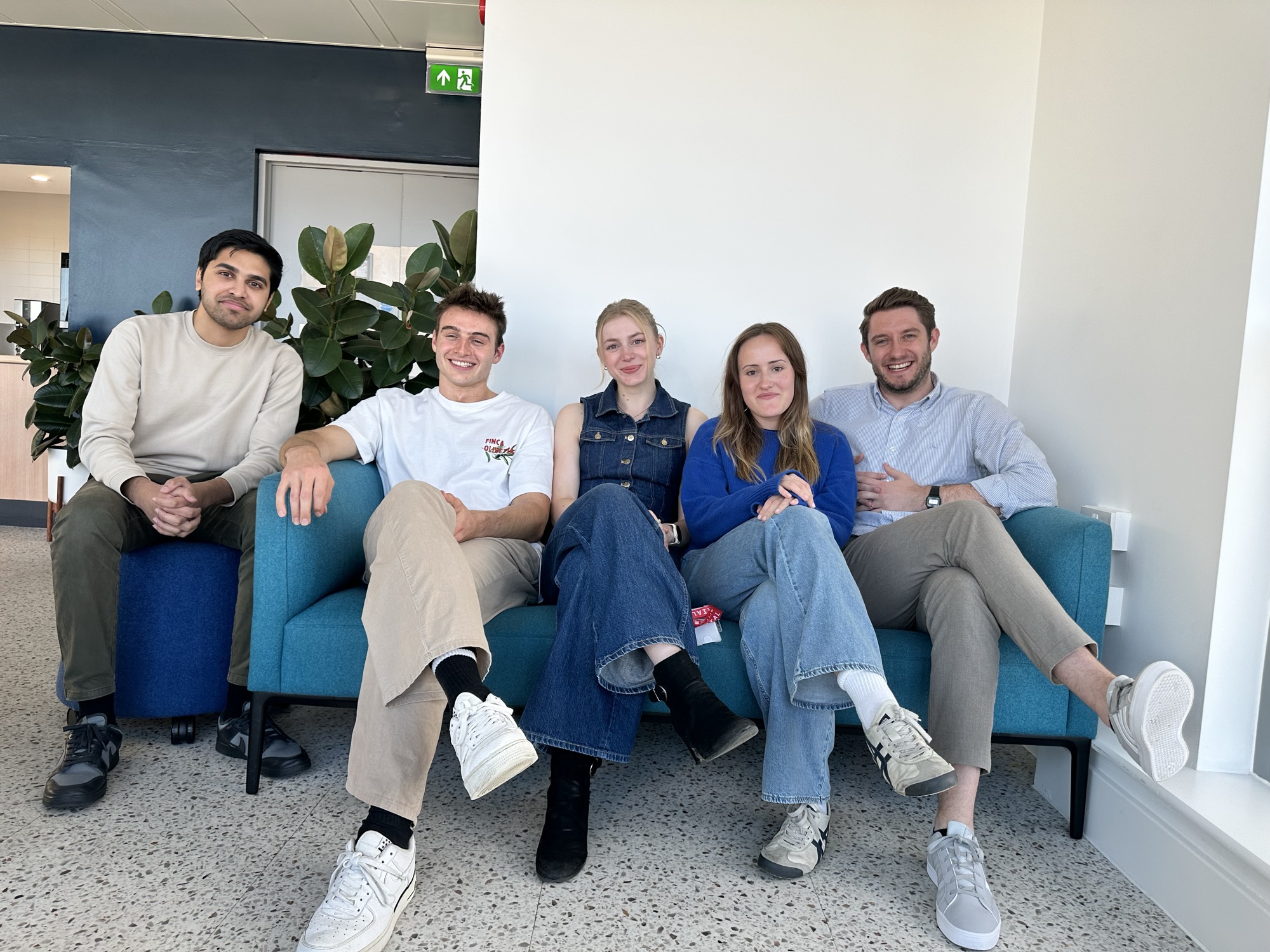
Mentorship, fair credit and a lab to fulfil your potential.
If the right device or analysis doesn't exist yet, we make it, and we share it.
Rigorous science in the age of AI is more important than ever.
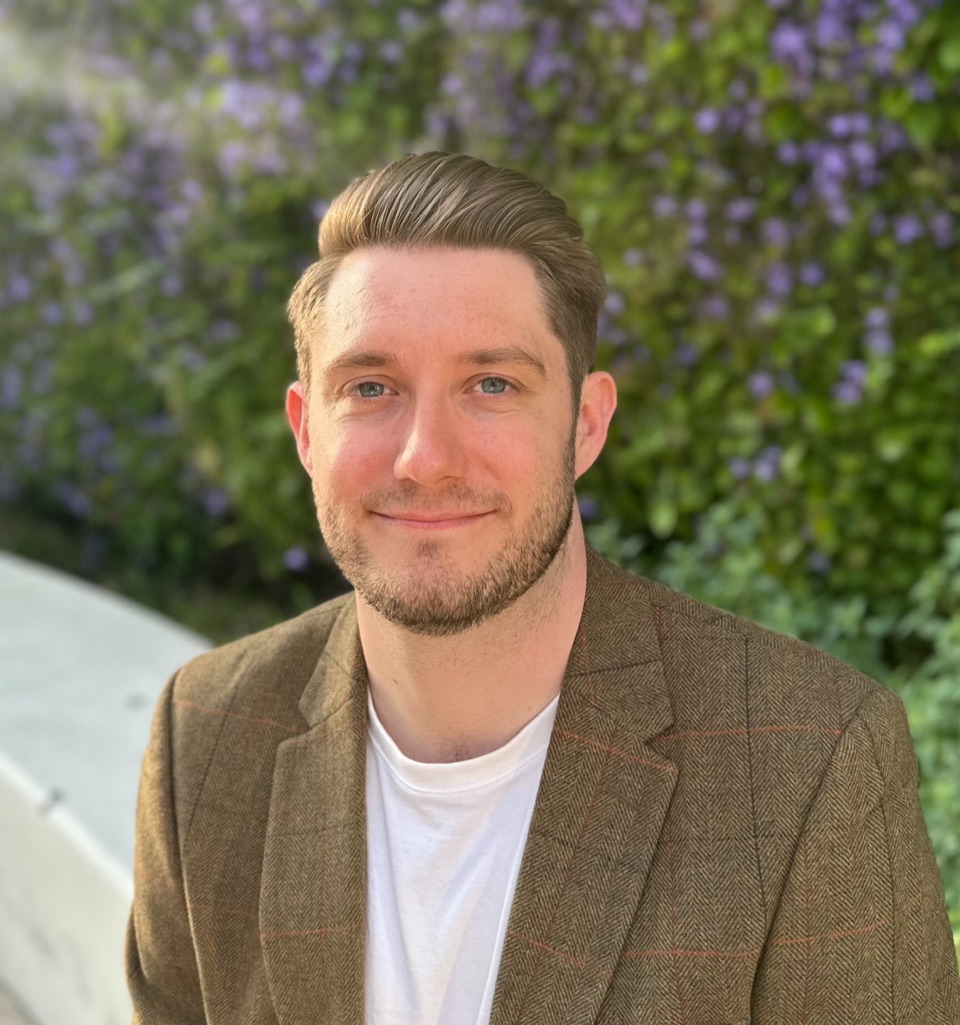
Alex leads the lab. Alex trained at Imperial College London (PhD) and the Wyss Institute at Harvard (postdoc), and has a background in vascular biology and tissue engineering.
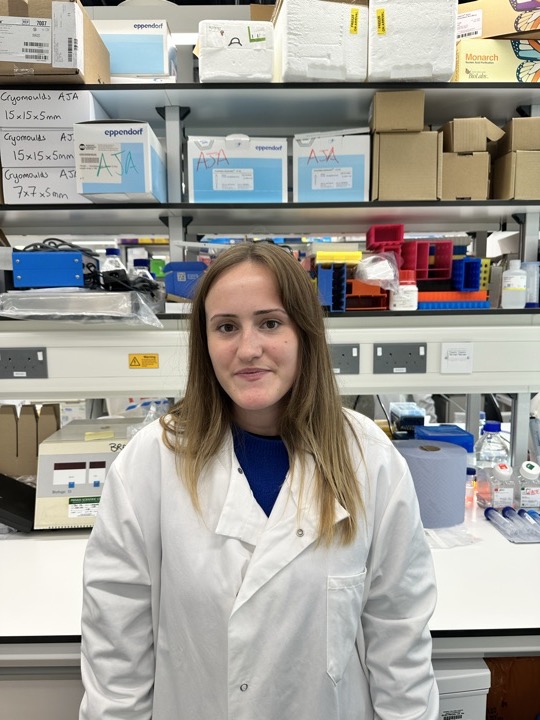
Henry uses bioinformatic insights to guide transcription factor-directed cell fate programming for regenerative medicine and disease modelling.
Hobbies outside the lab: piano, bachata and bouldering.
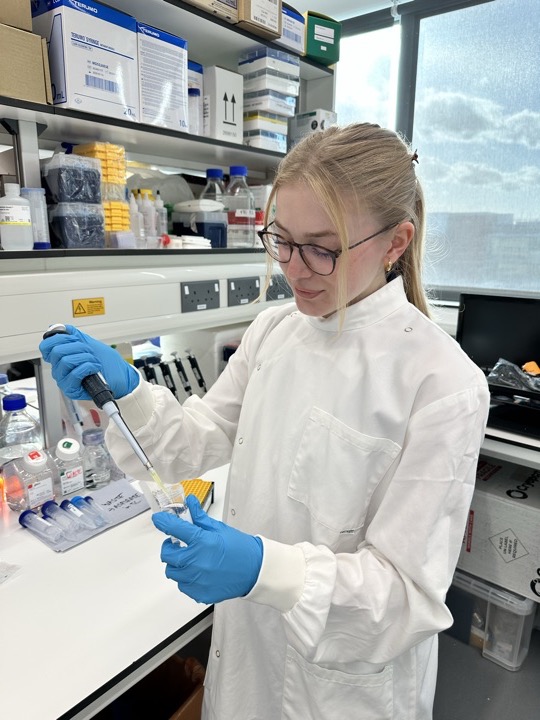
Backgrounds in cell biology, bioengineering, physics or computation are all welcome. Curiosity matters more than a perfect fit.
Lead a theme, from microvascular engineering to cardiac-on-chip.
Enquire RollingFunded and self-funded routes. Biology, engineering or computation.
Enquire RollingHelp run and grow the lab's iPSC and microfabrication pipelines.
Enquire RollingShort, real projects with a path to authorship.
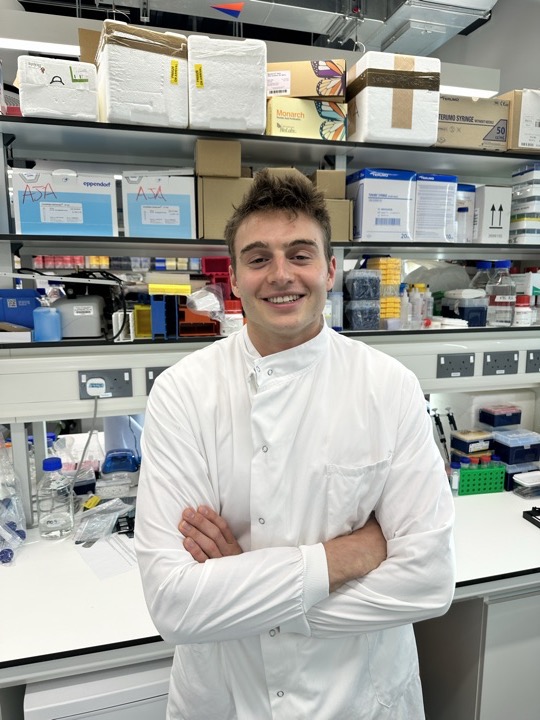
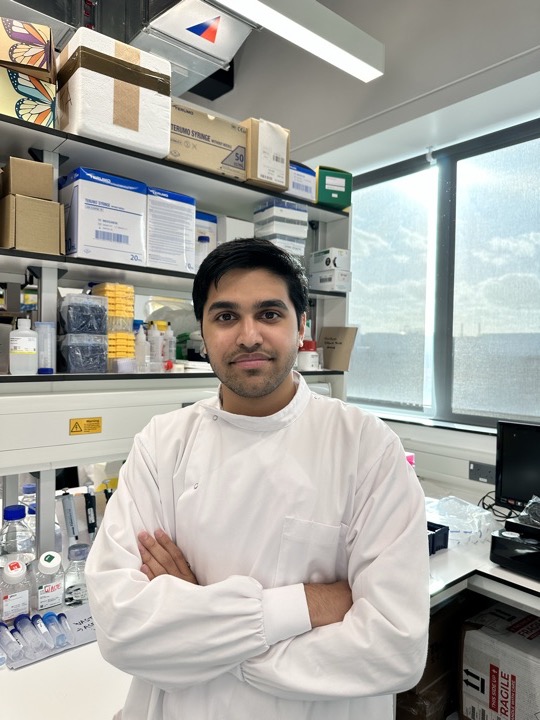
EnquireMahir Khan (BHF PhD Student), Clara Evans (BHF-CRE / BRC NIHR PhD Student), Henry Chapman (Masters Student) and Fiona Fusenig (BSc Student) join the lab.
Meet the team →PhD, postdoc, technician and student project positions are open, with rolling deadlines.
See open roles →Mahir Khan received a distinction for his Masters degree. Congratulations, Mahir!
Justin Chan and Lexie Thorne join the lab for summer placements (June – October 2026).
October 2025 – March 2026.
June – October 2025.
The lab launches at the National Heart & Lung Institute, Imperial College London.
No publications match that search.
Email is the best way to start a conversation. Use the lab inbox for most things, or contact Alex directly.
Visits, collaborations and general questions. For enquiries addressed to Alex personally, email him directly.
PhD students, postdocs, technicians and project students: send a CV and a short note on what draws you to the work, and which research theme you'd want to build on.
We work with clinicians, engineers and industry on human-relevant models for target discovery, safety and efficacy testing.